
Towards the end of the 1980s and early 1990s, Tunisian tourism began to diversify its offering: the launch of Saharan tourism, the first thalassotherapy centers, golf courses, and new tourist resorts in new regions (Tabarka, then Yasmine Hammamet, then Gammarth). It was during these years that a “New Products Department” was even created within the ONTT.
The choice of diversification seemed definitive at the time, as illustrated by the words of Tourism Minister Mohamed Jegham: “We need to create one golf course per year, or half a course, or if we can’t, a quarter of a course; but we are continuing on the path of diversification.”
In 2003, a Ministerial Council confirmed these choices following the recommendations of the World Bank study (2001), adding the diversification of accommodation, particularly through guesthouses, and the encouragement of local tourism, while rejecting the reform of the sector’s administrative structures and postponing the Open Sky agreement.
These postponements were our original sin.
Compulsive hoarding
Since then, Tunisian tourism has been going round in circles, navel-gazing and… accumulating strategies that never reach the implementation stage. A sort of “Diogenes syndrome” on an industry-wide scale. There is a stubborn refusal to acknowledge the decline of the destination (denial of reality) with a compulsive accumulation of studies and strategies that are good for filling drawers (syllogomania).
According to the latest news, the administration and professionals are seeking to revamp the recently adopted “2035 strategy.”
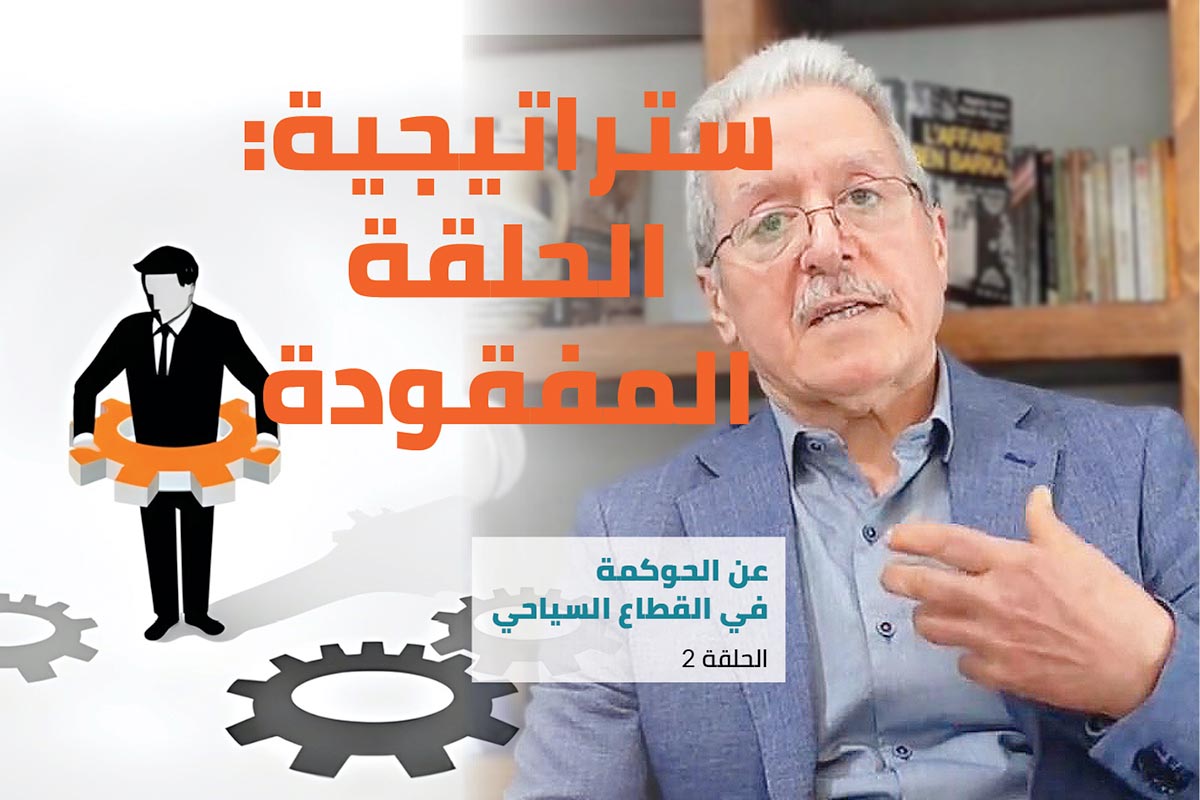
In this second episode of our El Mindhar Essiyahi series on tourism sector governance (see episode 1), I hypothesize that the disease afflicting Tunisian tourism is a failure to properly execute strategies and reform the structures needed to do so.
We should replace the principle of “stewardship will follow,” once advocated by de Gaulle, with that stated by Napoleon, according to whom “war is an art of execution”; economic warfare too.
This principle was summed up by the former CEO of Renault-Nissan, Carlos Ghosn, when he stated: “Success depends on choosing the right strategy for only 5%; the remaining 95% depends on the proper execution of that strategy.”
By Lotfi Mansour, tourism consultant (former director of specialized magazines; initiator and Honorary President of the Tunisia Convention Bureau).
Production: MCM.