
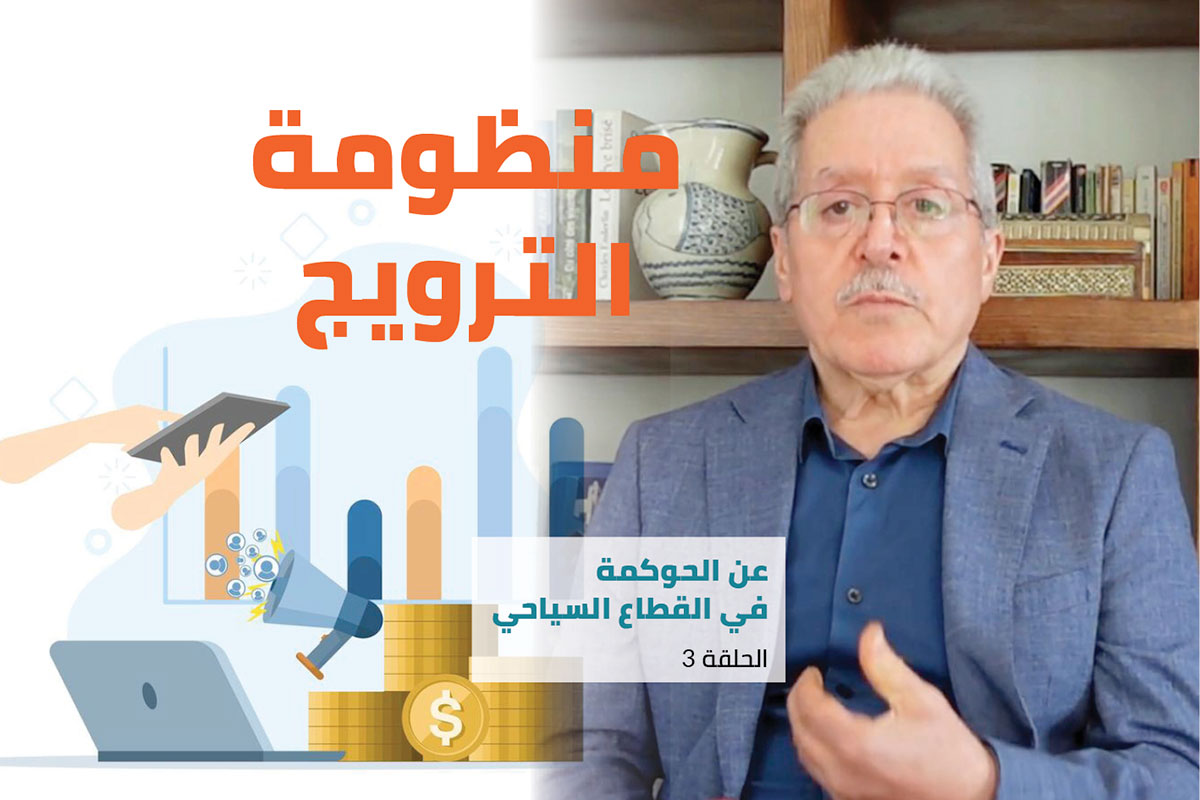
They say, “There is no such thing as love; there are only proofs of love.” Love, then, is judged by actions. The same is true of the tourism sector: Public officials constantly profess their love for it, but in reality, they keep cutting its promotion budget a little more each time.
As a result, by 2026, this budget will account for only 25% of the overseeing ministry’s total budget. It stood at 33.5% in 2017. And since promotion is carried out primarily in Europe, the budget shrinks even further as the dinar depreciates against the euro.
The sector could also have counted on the roughly ten million dinars from the Competitiveness Fund (FODEC), generated by an annual tax paid by hoteliers, travel agents, and restaurants. Not so! Never made public, the expenditures of this fund—established as a supplement to the state budget contributed by the professionals who sit on its board, and in which they are supposed to actively participate in decision-making—are at the discretion of the administration. The only expenditure known “unofficially” is that of the “subsidies” granted to the three federations—FTH, FTAV, and FTRT—to the exclusion of all others.
In recent years, this funding for the federations has taken the form of reimbursement for communication expenses, subject to administrative approval, and the amount of which has been cut in half. It is just another way of “keeping on a tight leash” federations that are struggling due to their meager budgets and are often unable to generate their own revenue.
This approach and the current state of the federations are far removed from the criteria of good governance, especially when one considers the anachronistic nature of many laws and the lack of transparency surrounding the sector’s financial figures.
The third episode of our El Mindhar Essiyahi series on tourism sector governance (see episode 2)
By Lotfi Mansour, tourism consultant, former director of specialized magazines, Editing Director of Touriscope
Production: MCM.