

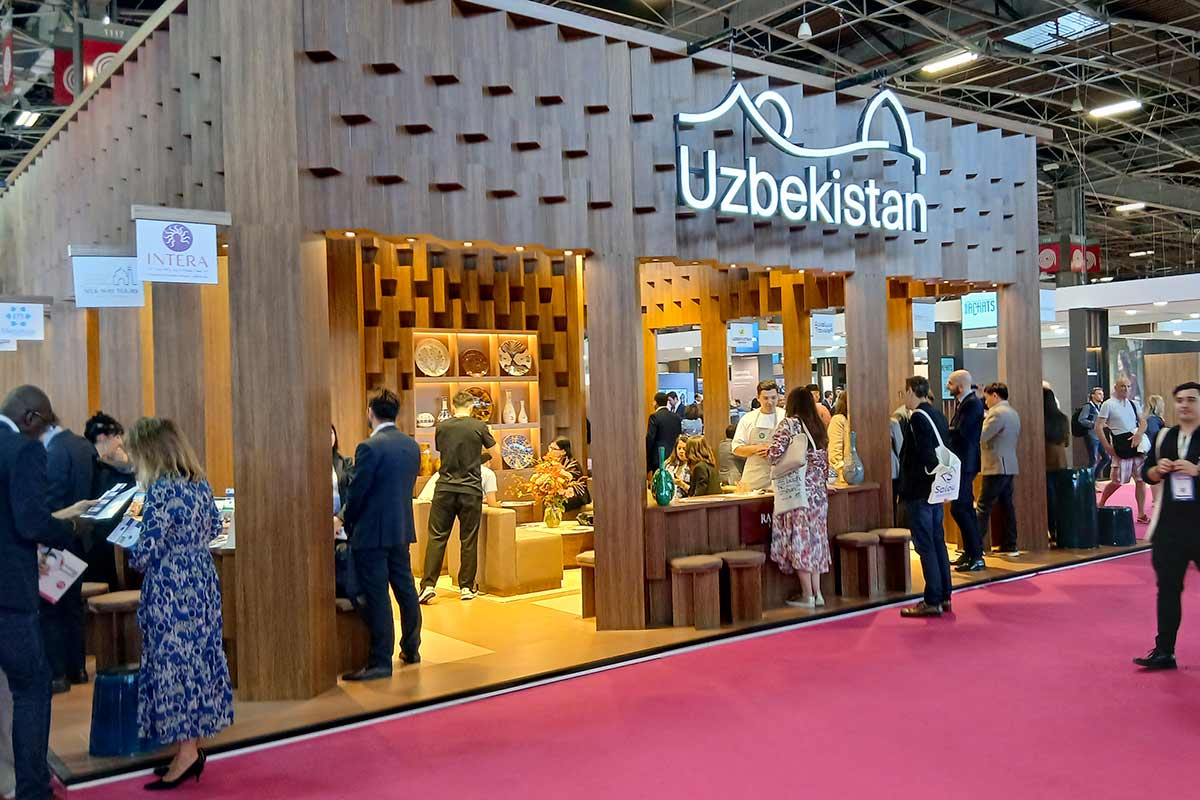
As this year’s featured country at IFTM, Uzbekistan is undoubtedly a model for launching a new destination, both in terms of its exceptional tourism growth and the way it has achieved it.
In 2020, the country welcomed barely 1 million international tourists; by 2025, that number had risen to 11.7 million, generating $4.8 billion in tourism revenue.
It is now aiming for 20 million tourists and $6 billion in revenue by 2030.

How does this former Soviet republic achieve such results? First by embracing its identity, and then by getting organized.
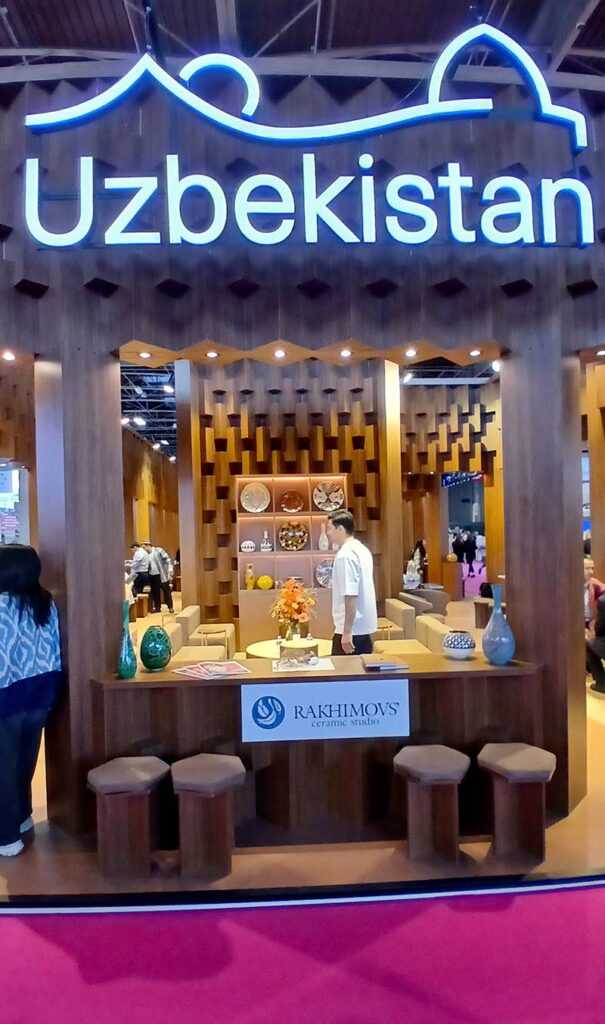
The country of Samarkand, Tashkent, and Bukhara is capitalizing on its culture and history. Its participation in the IFTM was a prime example. Its architectural heritage took center stage, particularly its Persian-style mosques, which were featured on the trade show’s poster. Traditional crafts were also highlighted on the booth, with a workshop of master potters carrying on the tradition.
The country has also capitalized on the appeal of major hotel chains and the opening of numerous hotels and lodging facilities. It has opened the air transport sector to competition and now has six airlines, including the state-owned carrier Uzbekistan Airways, which has a fleet of about 50 aircraft.
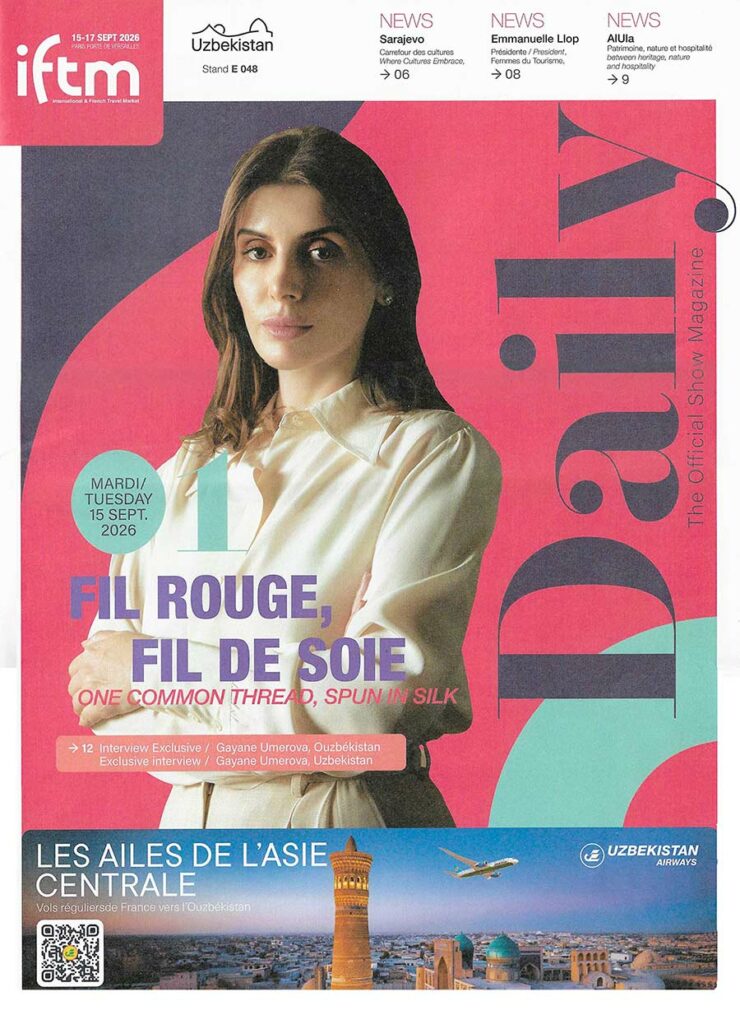
Furthermore, there is no longer a ministry dedicated to tourism, but rather a committee responsible for the sector, overseen by the Office of the President through a Department of Creative Economy and Tourism. Its director was a featured guest at this year’s IFTM, promoting, among other initiatives, the “Film Rebate Uzbekistan” program, which reimburses up to 25% of the filming costs for international productions.
Can we draw inspiration from it, then? Certainly yes, if we acknowledge that the prestige of Carthage or Kairouan is every bit as great as that of Samarkand. Or that our crafts, including ceramics, are fabulous.
Certainly not, if we believe that our governance system is sound, that the ONTT is effective, or that tourism can grow without the development of air travel.
Lotfi Mansour